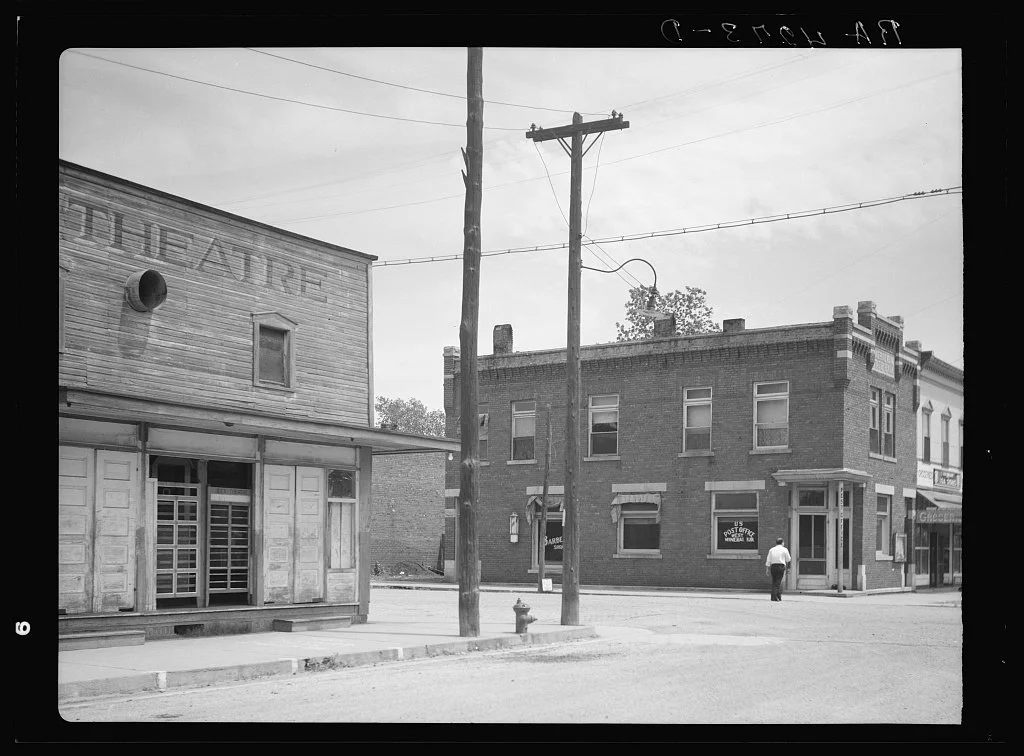
City of West Mineral
Step into a legacy carved from the earth, where the titans of industrial history still touch the Kansas sky
Home of Big Brutus
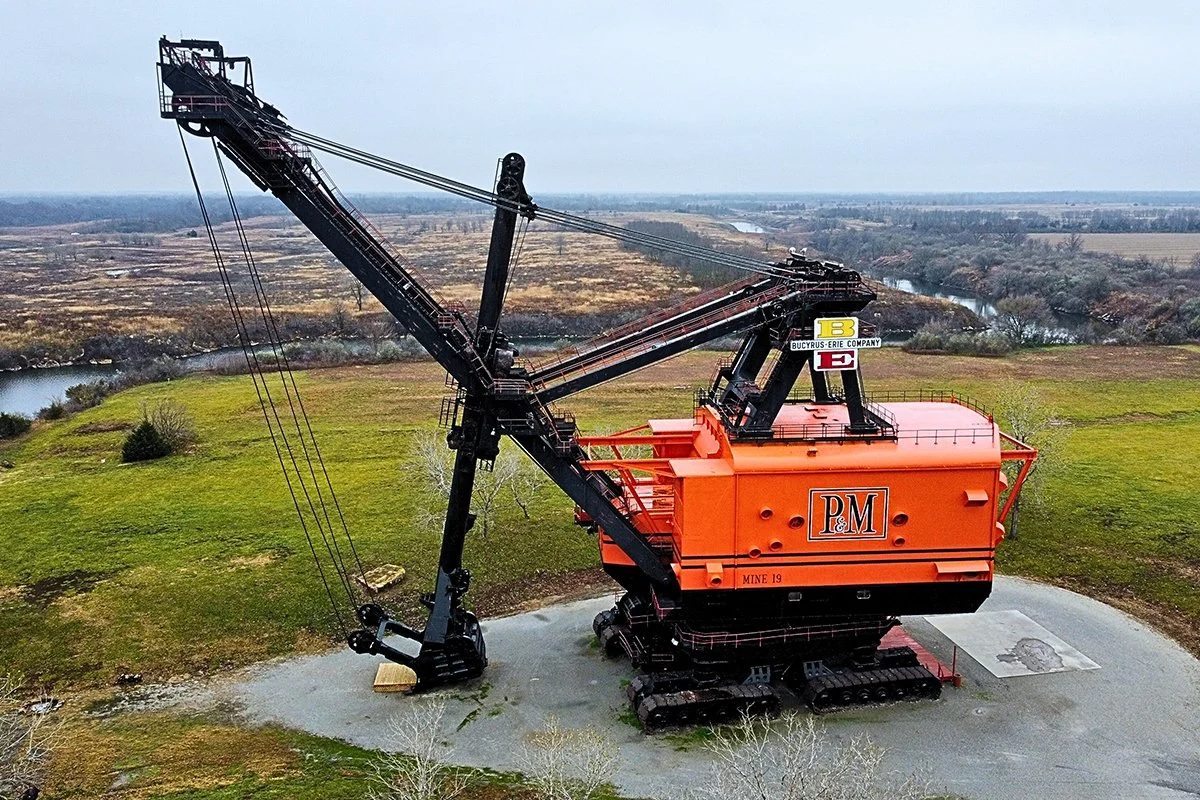
Rising high above the Southeast Kansas landscape, Big Brutus stands as a monumental tribute to the rich mining heritage of West Mineral. Founded in the late 19th century as a booming coal camp, West Mineral quickly became the industrial heartbeat of the region, fueled by thousands of hardworking miners who carved a living out of the deep earth. As technology evolved, the town transitioned from dark underground shafts to the monumental surface operations of the mid-20th century. This industrial evolution reached its absolute peak in 1962, when the Bucyrus-Erie model 1850-B—affectionately dubbed Big Brutus was assembled on-site, forever binding the destiny of the town to this 16-story, 11-million-pound mechanical marvel.
Operating 24 hours a day, the giant electric shovel used its massive 90-cubic-yard bucket to unearth the deep coal veins that powered a growing nation. When economic shifts finally silenced its engines in 1974, the community refused to let their history fade. Rather than dismantling the titan, the people of West Mineral rallied to transform Big Brutus into a museum and a designated National Historic Mechanical Engineering Landmark. Today, this towering icon stands proudly against the Kansas sky; a physical anchor to West Mineral's past, celebrating the grit, determination, and enduring community pride that built America's industrial heartland.
Historical
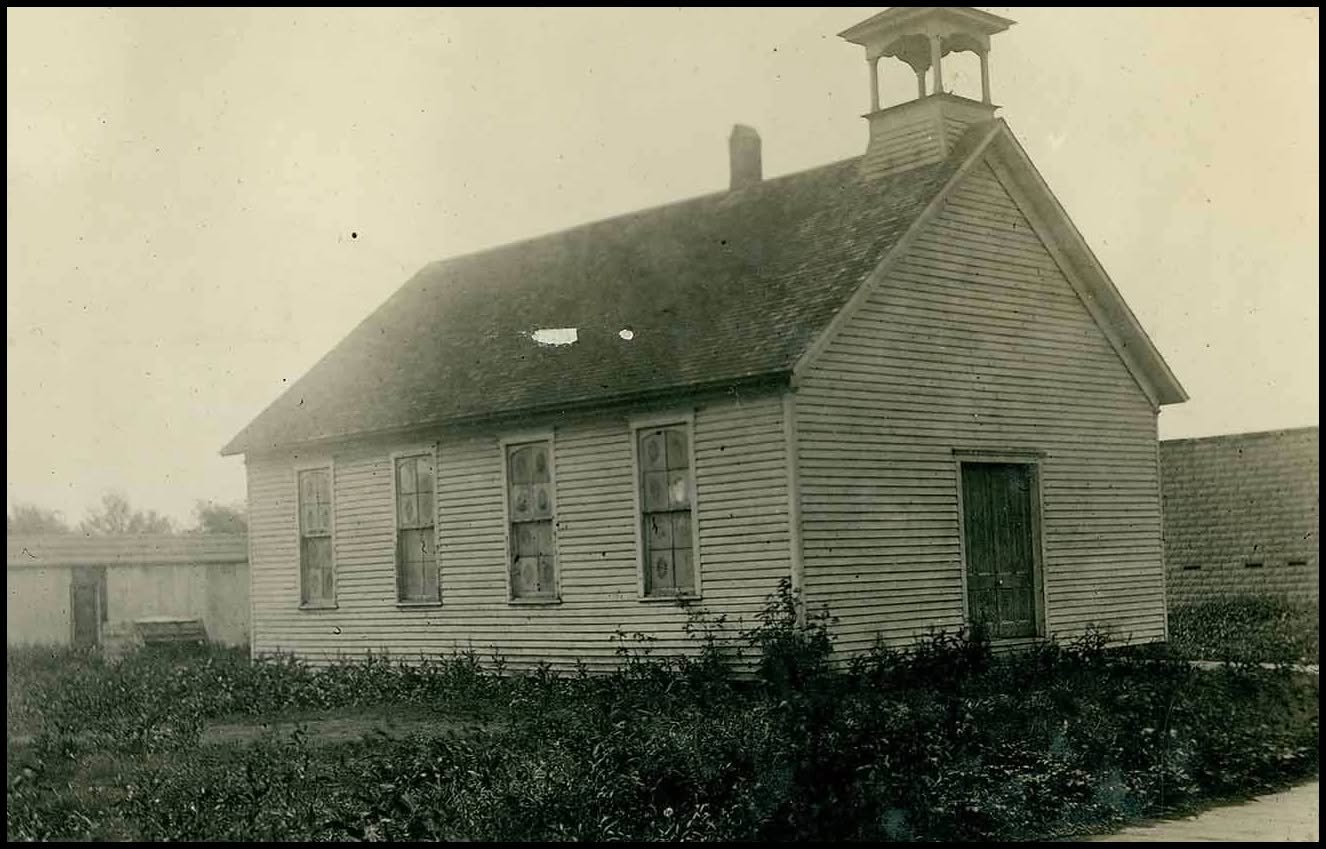
Bathed in the quiet simplicity of early rural life, this modest white-clapboard church stands as an enduring pillar of community faith and resilience. Its clean, austere lines are topped by a classic open bell tower, which once rang out across the prairie to gather families for worship and celebration. Surrounded by untamed Kansas brush, it captures the foundational spirit of the early settlers who built a life in West Mineral from the ground up.
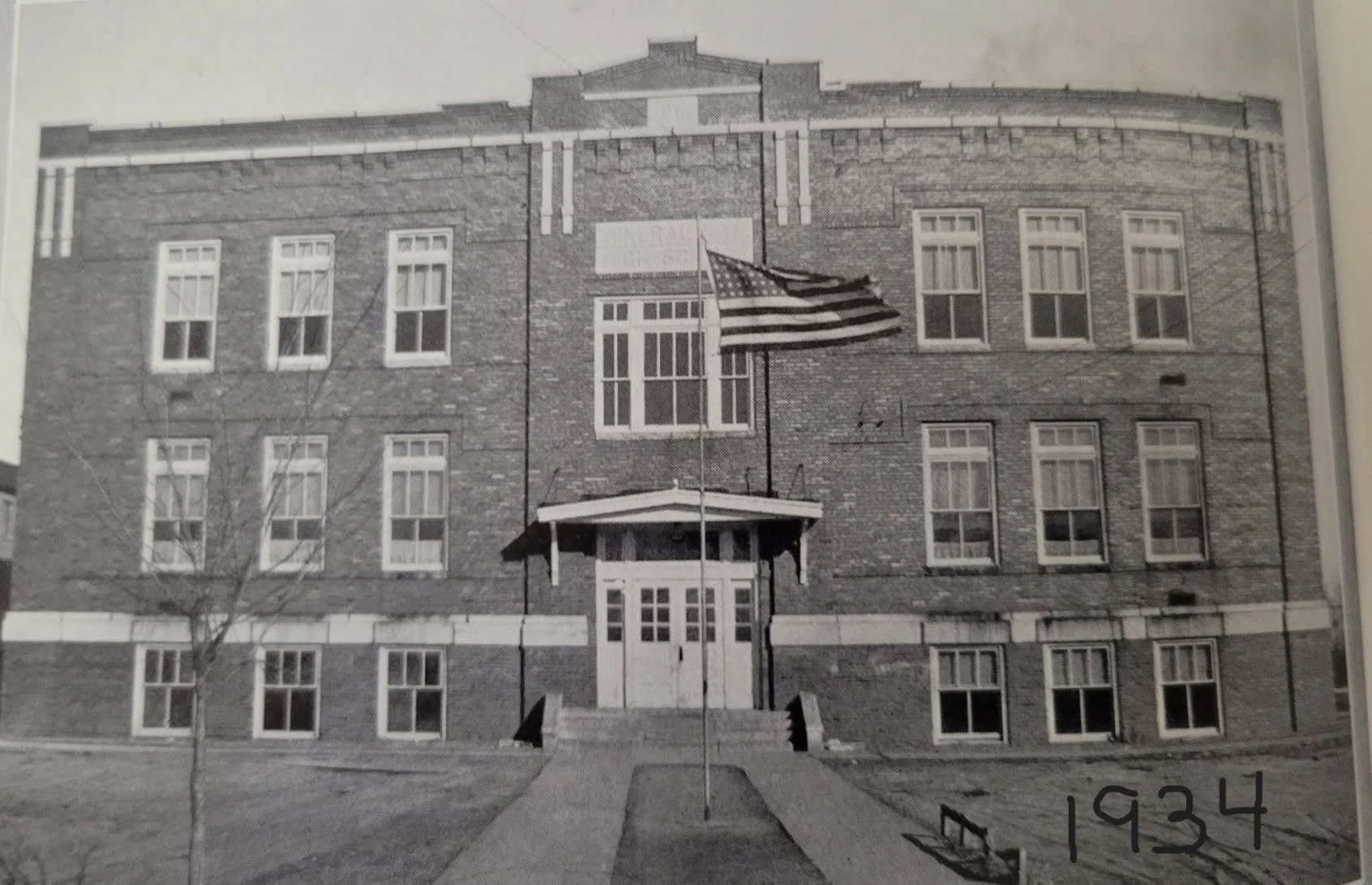
Captured in 1934, this stately two-story brick building stands proudly as the educational anchor for the youth of West Mineral. An American flag flutters boldly in the breeze before the grand entrance, framed by symmetrical rows of large sash windows that once looked out over a bustling schoolyard. Its enduring masonry architecture reflects a community deeply invested in its future, serving as a powerful symbol of civic pride and hometown roots.
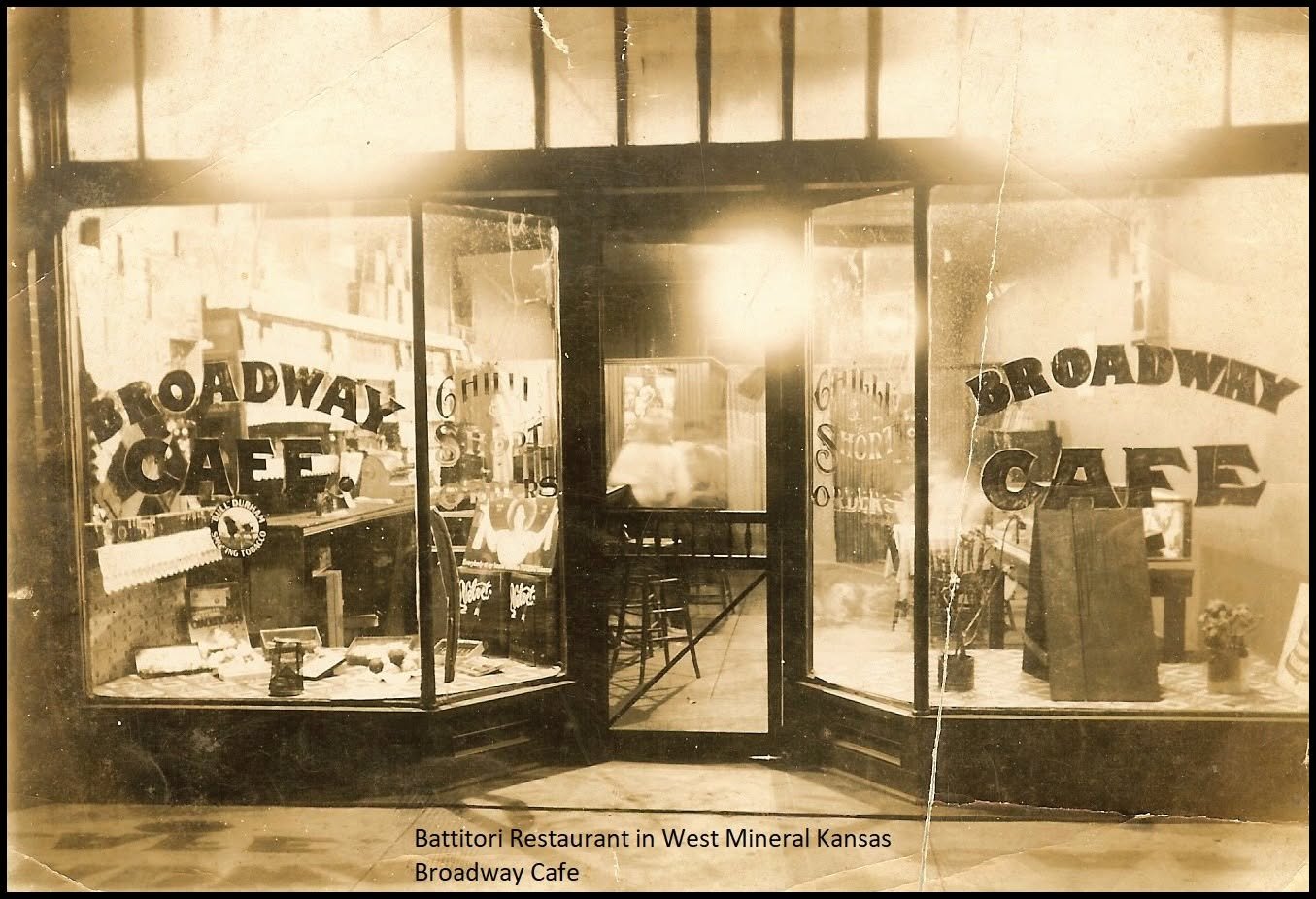
This rare glimpse into the Battitori Restaurant popularly known as the Broadway Cafe captures the authentic grit and charm of early 20th-century West Mineral. The storefront's large glass windows feature bold, hand-painted lettering advertising "Chilli Short Orders," framing a detailed view of a long wooden counter, swivel stools, and a pressed-tin ceiling inside. Packed window displays showcasing vintage tobacco tins, a classic thermos, and daily goods highlight a bustling hub where local coal miners gathered for a hot meal and community connection.
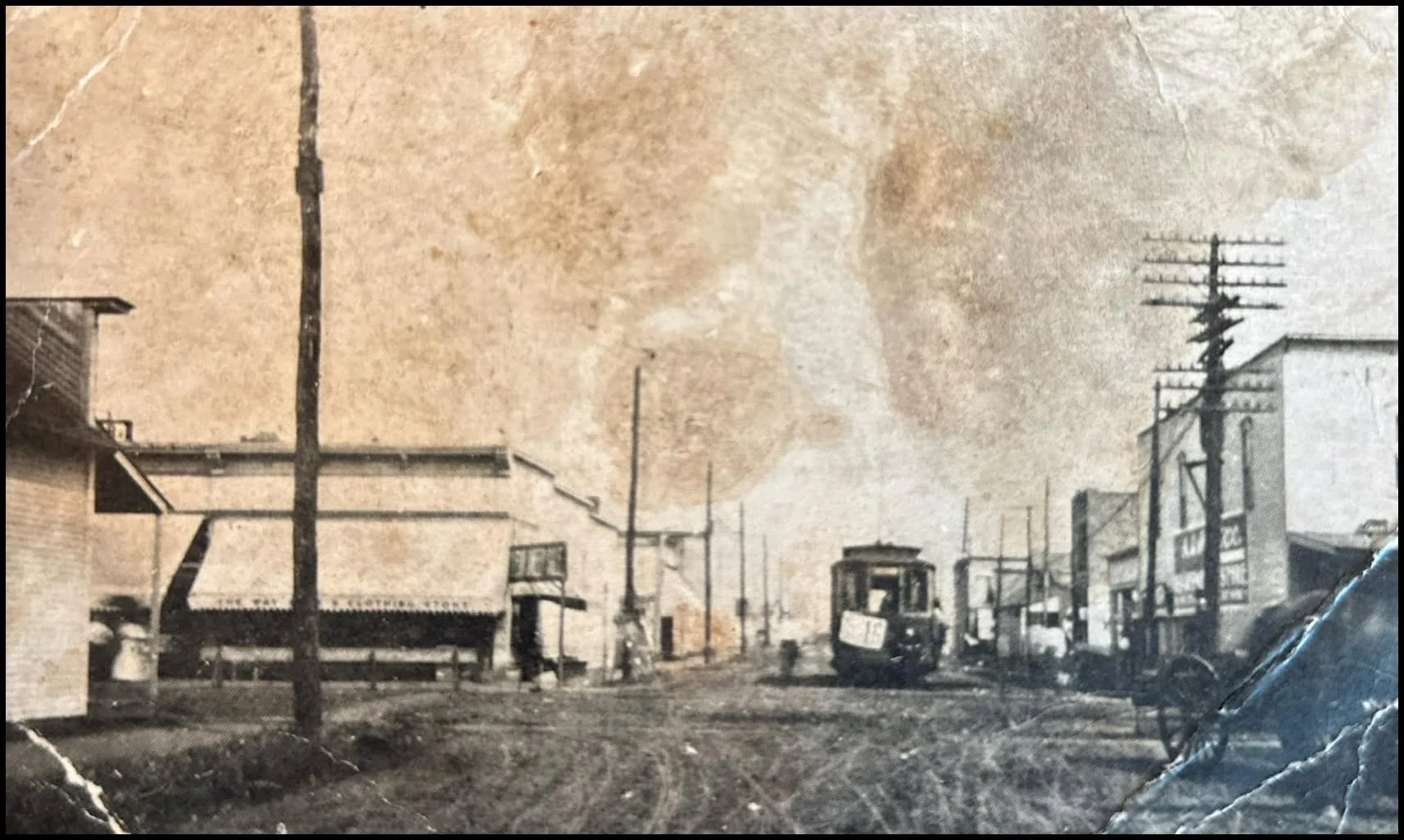
A weathered, sepia-toned window into the past, this striking photograph captures a bustling afternoon on McClung Avenue during West Mineral's boom era. An early electric streetcar cuts down the center of a wide dirt road, flanked by prominent wooden storefronts, a maze of overhead utility wires, and a waiting horse-drawn carriage. The textured creases and aging of the photograph only add to its raw, historical charm, showcasing a town rapidly moving into the modern age.